Our Language Shapes the Mindsets of Children Toward Animals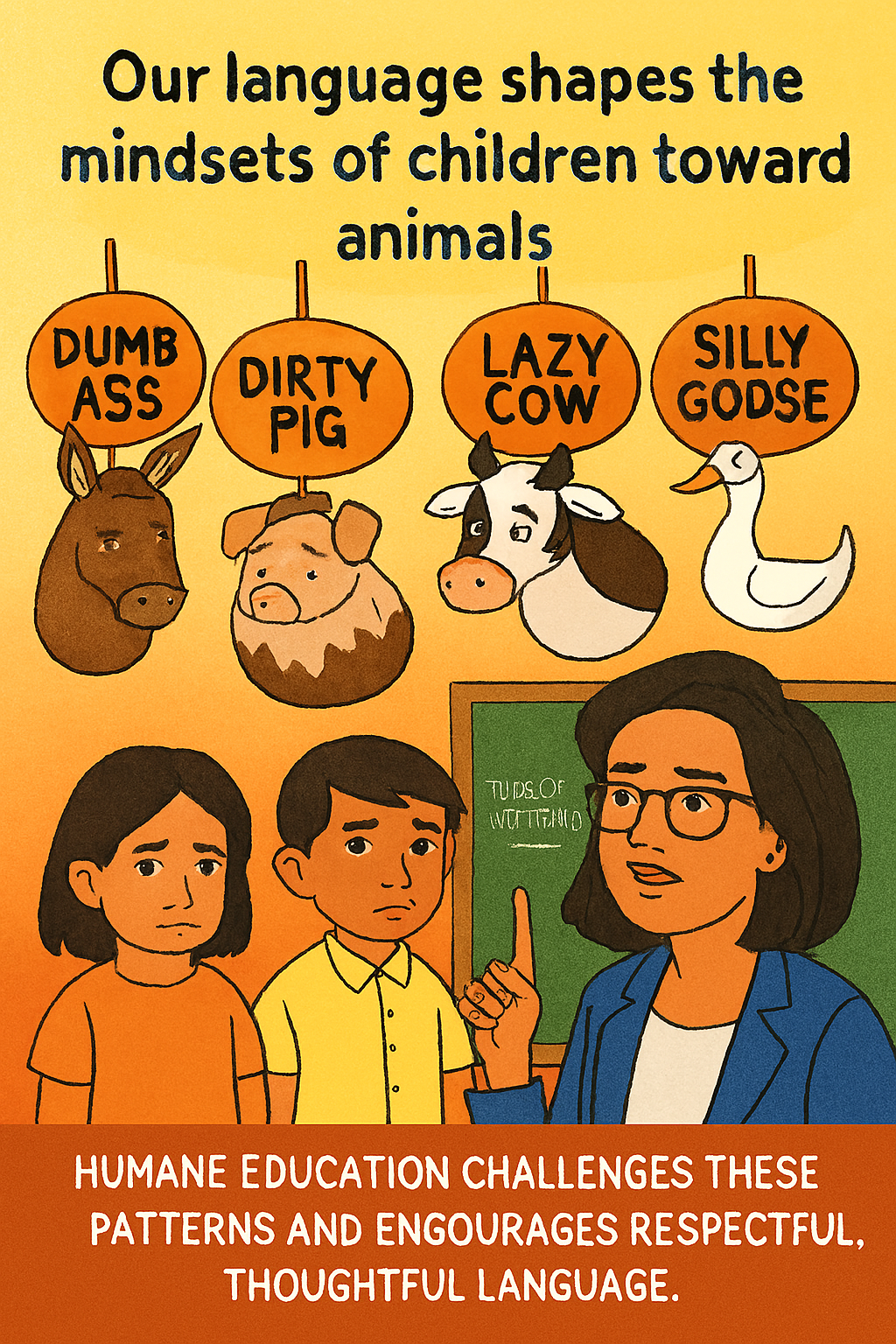
“Dumb Ass, dirty pig, lazy cow, silly goose, and many more!
We’ve all heard these phrases. For many people, these words slip into everyday vocabulary, often without a second thought. But when grown-ups, especially parents, educators and leaders, use the language that demeans animals, it sends a subtle yet powerful message.
When children grow up hearing animals referred to with derogatory terms like “dumb ass,” dirty pig,” or “lazy cow” or “silly goose,” etc., they begin to associate these creatures with negative traits such as stupidity, filth, or laziness. These words, often used casually to insult people, subtly teach children that animals are lesser beings, undeserving of respect or kindness.
This kind of desensitization has substantial consequences over a period of time, this type of language shapes their perceptions, making it easier to dismiss animal suffering or ignore their emotional lives. What begins as a joke or insult can quietly erode the natural empathy children feel toward other species and they become less inclined to protect them, care for them, or see their intrinsic worth. It becomes harder to foster compassion when the language around animals is steeped in ridicule or contempt. It’s time to rethink the metaphors we pass down. Words matter! They shape how we treat not only animals but also how we view other people and how we lead.
Humane Education challenges these patterns by encouraging respectful, thoughtful language because every word we use either builds a bridge of empathy or a wall of indifference. Thoughtful language builds empathy, and every creature deserves dignity.
hashtag#KindnessIsContagious
hashtag#RaiseEmpathy
hashtag#CompassionateClassrooms
hashtag#AnimalRespect
hashtag#LanguageShapesMindsets
hashtag#RippleEffect
hashtag#ChildLedChange
hashtag#STRAWIndia